



For Iranians abroad, the year 2026 began glued to news programs on their satellite televisions, convinced that they were witnessing the decisive revolt that would bring down a regime which, since its establishment in 1979, has driven the country to the brink of chaos, bankruptcy, and existential peril. U.S. President Donald Trump’s promise that help was on the way for the “brave Iranian nation” further fuelled these hopes. Some frantically called relatives inside Iran and began making plans to return; others were overcome with shame for having had lost faith in the resolve and courage of their compatriots after the brutal suppression of the Woman, Life, Freedom uprising in 2022.
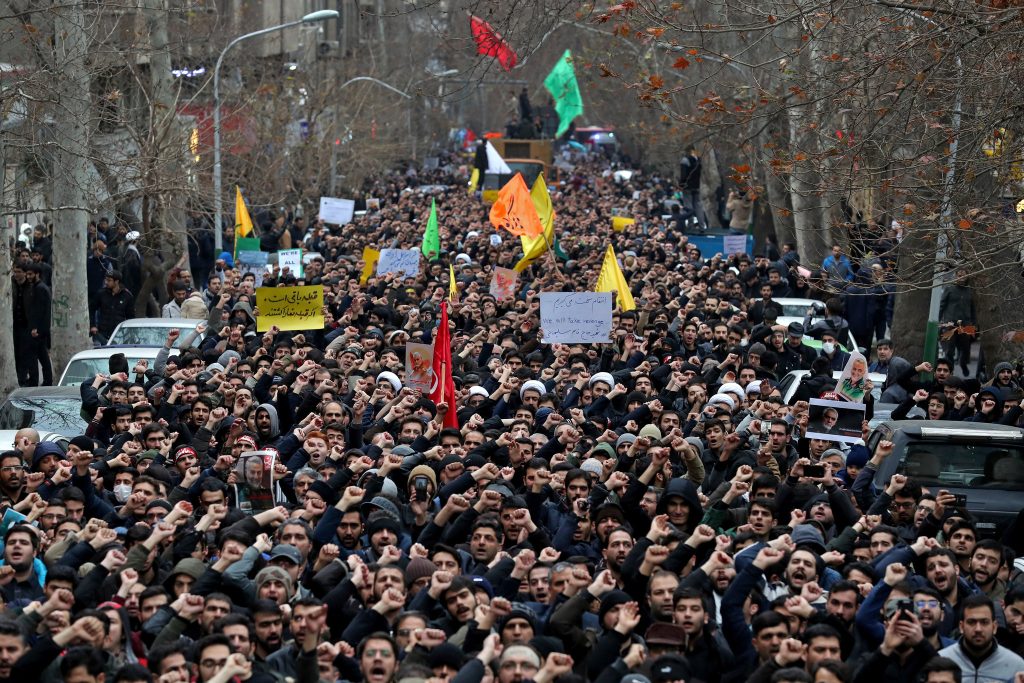
The nationwide protests of the past four weeks have been unprecedented in both scale and duration compared to those of the previous four decades. The regime’s response has been equally unprecedented: deploying extreme violence, reportedly including foreign fighters from neighbouring countries; using live ammunition and, allegedly, even poisonous gas against unarmed protesters; raiding hospitals for injured protesters; and shutting down internet and phone lines to prevent the world from witnessing these atrocities. The limited footage that has emerged has drawn comparisons to war zones. International media reported that within only a few days, as many as 12,000 to 20,000 protesters may have been killed, while human rights organizations warn that the true toll could be far higher and fear mass executions among detainees.
Yet, as Iranians pinned their hopes on the U.S. president’s assurances that “help was on the way within 24 hours,” he ultimately declared that military intervention was unnecessary, claiming he had halted the killings and executions and thanking the regime for the deal they had reached. As killings and executions nonetheless continued, many Iranians felt betrayed and abandoned in the face of the regime’s brutality. The question now confronting Iranians is how to prevent this uprising from ending like the ones before it –without any change and with the totalitarian regime carrying on its oppression.
For Iranians two issues stand out in this regard: the first issue is, do Iranians need international military intervention? The regime’s response to the protests has made Iranians realise that domestic protests alone have little chance of overthrowing the regime. At the same time, they see that diplomatic and non-military measures of Western governments have little effect. Western governments have largely exhausted existing policy measures – diplomatic engagement and economic sanctions – with little discernible impact on the regime’s behaviour. Calls to designate the Islamic Revolutionary Guard Corps (IRGC) as a terrorist organization and to close Iran’s embassies in Europe have likewise failed to gain traction.
As a result, a growing number of Iranians who once opposed U.S.-led military intervention – similar to that of June 2025 – are now reconsidering their position. Calls have intensified for invoking the Responsibility to Protect (R2P) doctrine, which permits international intervention to prevent genocide, war crimes, crimes against humanity, and ethnic cleansing. R2P emerged in response to the international community’s past failures to prevent mass atrocities. Others argue that a U.S.–Israel coalition should strike the regime on security grounds, citing claims that missiles containing enriched uranium were used against U.S. bases in 2020 and that missiles aimed at Israel could potentially be fitted with nuclear warheads.
The second issue that stands out is, who can lead this national revolution and overthrow the regime? For a long time, the protests had no clear leadership. This lack of leadership was even hailed by some people as a particular strength. During the earlier Woman-Life-Freedom Movement they claimed that without leadership divs, the regime would find it difficult to quell the protests. In the meantime, however, the situation has changed and most believe that they need to agree on a leader to guide the protests and steer the transition into a new socio-political order. They also recognise that leadership is a prerequisite for sustained international support – potentially including military intervention. Foreign governments fear that overthrowing the current regime without clear leadership could trigger civil conflict, state fragmentation, and prolonged instability – as seen in Iraq and Libya.
While numerous opposition divs operate inside and outside Iran, Reza Pahlavi’s name has emerged prominently in protest slogans and an increasing number of people are rallying around him. The support for Prince Reza Pahlavi is, however, ambivalent, as he represents continuity – particularly, with Iran’s former constitutional monarchy and the political and social order that preceded the 1979 revolution. Supporters view this continuity as a potential unifying force across social, religious, and ethnic divides and point to his long-standing opposition to the Islamic Republic while in exile. Critics, by contrast, see this continuity as a symbol of the social order they sought to overthrow in 1979 – regardless of the present outcome. Despite these reservations, most critics have now come to realise that Reza Pahlavi is the only opposition div that has a chance to gather enough national and international support and thus see him as at least a transitional leader. In this sense, people refer to him as a “broad-church” leader – an institutional focal point capable of fostering unity during a transitional period, pending a democratic decision on Iran’s future system of governance, whether that be a reformed constitutional monarchy or a secular republic.
What will happen over the next weeks or months, is entirely open. What is clear, however, is that following the brutal slaughter of peaceful protestors – unprecedented in modern Iranian history – the illegitimacy of the Islamic regime in the eyes of the Iranian nation and the world is irreversible.
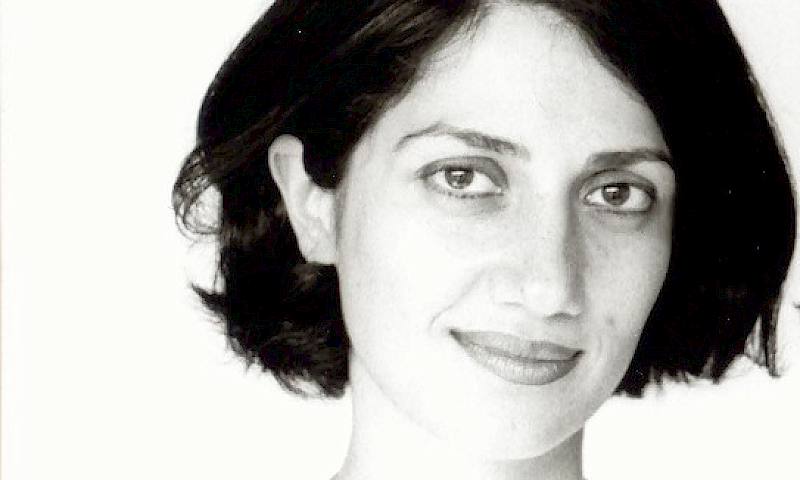
Shiva Rahbaran was born in Tehran and left Iran with her family after the Islamic revolution in 1984. She holds a DPhil in English literature from the University of Oxford. Her books include Iranian Writers Uncensored and Iranian Cinema Uncensored. She contributes to the BBC and Iran International and lives in London.